
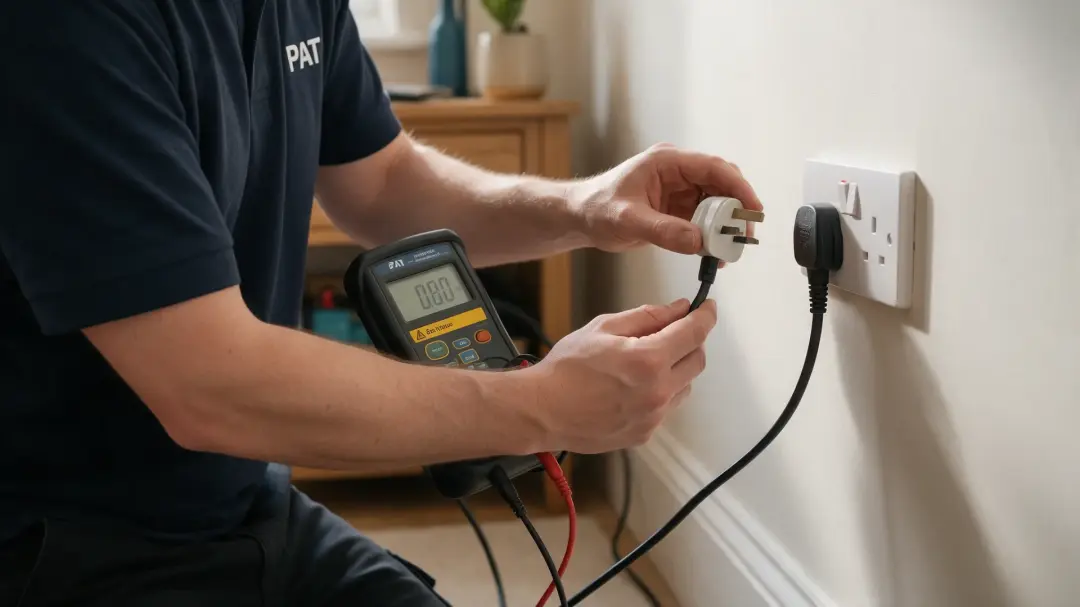
Is PAT Testing a Legal Requirement?
Research checked: 5 October 2026.
PAT testing is not a universal annual legal requirement. The important workplace obligation is to maintain electrical equipment so that it does not present danger. Whether inspection, electrical testing or other maintenance is appropriate depends on the equipment and how it is used. Calling something optional does not remove the duty to manage its risks.
For a business in Market Deeping or Holbeach, the useful starting point is an equipment assessment. That is more informative than buying the same yearly test for every item simply because another organisation follows that arrangement.
What the law actually requires
HSE's current PAT guidance explains that the Electricity at Work Regulations 1989 require potentially dangerous electrical equipment to be maintained safely. They do not prescribe annual appliance testing. HSE answers on the legal status of PAT testing.
Regulation 4 addresses maintenance to prevent danger, while Regulation 16 addresses the knowledge or experience needed for relevant work. These duties concern the outcome and the competence of the people involved. HSE guidance on the Electricity at Work Regulations.
A sensible system should therefore be able to explain which equipment is included, who is responsible and what happens when a defect is reported. A folder of labels with no process behind it gives a manager little useful information about the condition of equipment still in daily use.
How PAT fits into an equipment-maintenance system
Portable appliance testing usually refers to inspection and, where appropriate, electrical tests on equipment. It does not replace checks between visits, repairs when faults occur or attention to product instructions. HSE's HSG107 guidance describes a maintenance approach combining user checks, formal visual inspection and testing. HSE portable-equipment maintenance guidance.
In practice, a business can divide responsibility clearly. Employees report visible damage; a named manager arranges assessment; a competent person undertakes the relevant technical work. Discuss these responsibilities when booking PAT testing so that a failed item does not remain in circulation while everyone assumes somebody else has removed it.
The equipment register should match what is actually used. Include items brought in or moved between sites under your arrangements, rather than treating the original list as permanent. A newly opened workroom or different cleaning routine can change the assessment even if the calendar date stays the same.
Insurance, contracts and venue rules are separate questions
An insurer, customer or venue may require evidence of appliance inspection or testing. That requirement can matter to your business without being a blanket statute that applies identically to every organisation. Read the actual policy or contract rather than relying on a statement that all appliances legally need a sticker every year.
Ask what evidence is expected, which equipment it covers and whether a specified interval is contractual. If the wording is unclear, obtain clarification from the organisation imposing it. Bring those details to the testing provider so the agreed service addresses the requirement accurately. Do not assume a generic certificate automatically satisfies every event organiser or commercial agreement.
A PAT pass is not a guarantee against every electrical risk
Recent evidence illustrates why the maintenance conversation needs to be wider than labels. OPSS's September 2026 release records 267 fires involving e-bikes and e-scooters notified for 2025. Notifications came voluntarily from fire and rescue services, so this is not an estimate of all UK incidents. OPSS 2025 fire report and methodology.
Battery and charging risks may involve issues that ordinary appliance tests do not establish. A charger inspection cannot certify an entire battery system as free from internal defects. Where a workplace permits charging, discuss the products and intended arrangements as part of its wider safety assessment. The statistic does not show that lack of PAT caused those fires or that testing would have prevented them.
Similarly, an appliance pass does not certify a building's fixed wiring. If sockets, circuits or the consumer unit need assessment, that is a separate electrical installation task. Keep the two scopes clear when seeking quotations.
Who remains responsible when a contractor is used?
HSG107 explains that employing a maintenance contractor does not transfer the dutyholder's overall responsibility for compliance. HSE guidance on dutyholder responsibility. Arrange a handover that makes findings usable: identify failed equipment, agree how it will be kept out of service and decide who authorises repair or replacement.
Ask for an equipment list and understandable results rather than assuming the visit ends with every item passed. Agree how inaccessible or unavailable appliances will be recorded. If something has not been examined, that omission should be visible to the person managing the equipment. Follow-up arrangements matter particularly where equipment is shared between shifts or moved to another location.
Records that help you manage the next decision
A practical register can identify each appliance, its normal location, the relevant findings and action taken. Record changes of use and significant damage reports alongside inspection information. That creates a history a competent person can consider at the next review.
Do not treat the register as a substitute for investigating a current concern. An item that develops an unusual smell, visible damage or unreliable operation needs attention when the problem occurs. Staff should know the reporting route and be able to raise concerns without waiting for the scheduled contractor visit. Make the process accessible to temporary staff as well as regular employees.
Summary
The legal aim is safe electrical equipment, with maintenance proportionate to risk. PAT testing can contribute to that aim, but an annual visit is not a universal statutory rule. Contact Robert Bowman Electrical Contractor to discuss the equipment at your premises, any contractual requirements and an appropriate PAT testing scope.