
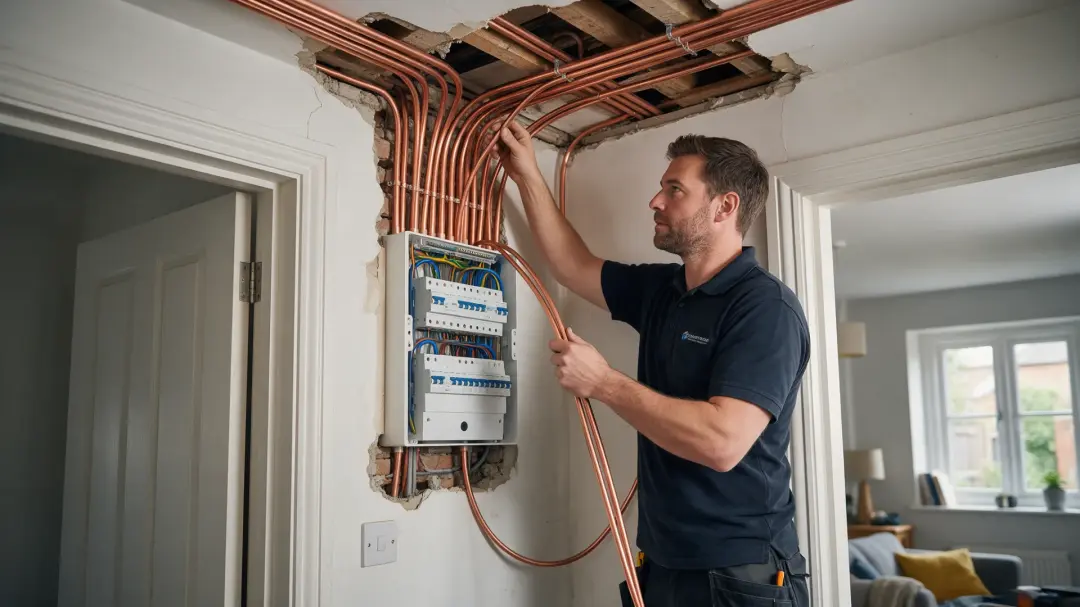
How Long Does House Rewiring Take?
Research checked: 5 October 2026.
A house rewire can take several days or extend over a longer renovation programme. The answer depends on the agreed electrical work, access to the building and the time between visits. It is helpful to separate the electrician's working days from the date when every wall has been decorated and every room is ready to use again.
If you are arranging house rewiring in Crowland, request a schedule based on a visit and a written layout. A number given before anyone has inspected the floors, walls and existing installation is a starting estimate, not a dependable completion promise.
The published range is a guide, not a booking commitment
NICEIC describes a broad range from a few days to a week or two, depending on project size and complexity. It recommends obtaining a property-specific estimate from the electrician. This is industry guidance rather than a national statistical average or a timescale promised by Robert Bowman Electrical Contractor. NICEIC advice on rewire duration.
The latest English Housing Survey headline profile gives England's mean usable dwelling floor area as 96 square metres for 2024. An average conceals considerable variation: it cannot tell you how accessible a particular home is or how many circuits it needs. English Housing Survey 2024–25 dwelling-size figures.
Two homes with the same bedroom count may have different layouts, outbuildings and lighting requirements. Compare the amount of work and the route through the building rather than treating bedroom count as the only useful measure.
Before installation: survey, layout and ordering
The programme starts before cable installation. Agree socket positions, switches, lighting points and the appliances that need provision. Kitchen drawings are particularly valuable because a later change to a cupboard or appliance position can affect work already planned.
Choose accessories early enough to check availability and compatibility. A special-order finish may have a different delivery date from a standard range. Ask whether the proposed starting date assumes every selected item has arrived, and agree how substitutions will be handled if something becomes unavailable. Confirm which other trades need to complete preparatory work before the electrician starts.
First fix: gaining access and creating cable routes
The first installation stage generally deals with cable routes and positions before final surfaces are completed. Access may involve lifting suitable floor coverings, working in roof spaces or opening agreed routes through walls. Ask which rooms will be disturbed so you can prepare them sensibly.
Clear access helps, but the contractor should explain what preparation is appropriate. Do not remove electrical fittings or start opening structural surfaces yourself. If previously concealed conditions change the proposed method, the schedule may need revision. Agree a point of contact who can approve practical layout decisions without leaving the installation waiting for an answer.
Second fix, inspection and handover
Later visits fit and connect the agreed accessories once the relevant surfaces and locations are ready. Plastering, cabinetry and other trades can create gaps between electrical visits. A quotation stating five working days spread over several visits is different from five consecutive days on site.
Allow for inspection, testing and any corrections before final handover. Completion means more than seeing lights switch on. Ask what certificates and circuit information you will receive and which Building Regulations notification arrangements apply. In England, Approved Document P provides the framework for electrical safety in dwellings. Government guidance on Approved Document P.
Discuss who will explain the consumer unit, answer questions about the installation and record any items still awaiting supply or finishing. A clear handover prevents a nearly completed job being confused with a fully completed one.
Living in the house changes the sequence
An occupied home introduces everyday needs that an empty renovation does not have. Tell the electrician about working hours, children, pets, access requirements and equipment that cannot simply be switched off. Discuss planned interruptions and whether remaining in the property is practical for the agreed scope.
Moving belongings between rooms and maintaining safe access can affect progress. Do not assume that one room will always retain power or that temporary extension leads will provide an acceptable substitute. Any temporary arrangements need to be discussed with the electrician. For a home in Pinchbeck, a short period away may be easier to organise than repeated disruption, but that decision should follow the actual programme.
What commonly extends the calendar programme
Late design changes, unavailable fittings and surfaces that are not ready can all move the finishing date. An electrician may also need to reassess unexpected earlier alterations uncovered during the job. None of these should be silently folded into a new deadline without explanation.
Agree how changes will be recorded, priced and communicated. Identify the person coordinating plastering and decoration, and establish whether making good belongs in the electrical quotation. A defined allowance for unforeseen work is more useful than a promise that nothing unexpected can happen. Where external supply arrangements are involved, ask whether another organisation's availability affects the programme.
Questions to ask about your quotation
Request the expected number of electrical visits, approximate working days and the earliest realistic handover date. Ask whether that date includes plaster repairs, replacement floor coverings and decoration. Confirm the access assumptions behind the estimate and whether the home needs to be empty.
Also ask what happens if a fitting arrives late, how much notice you will receive before interruptions and how additional work affects the schedule. These questions let you compare contractors on a shared understanding of the project. They also give you a practical basis for booking other trades without stacking every appointment immediately after the first installation visit.
Summary
Use published ranges to begin planning, then obtain a schedule for your own building. The layout, access, occupancy and gaps between trades determine the programme. For a rewire in Crowland, discuss the proposed scope with Robert Bowman Electrical Contractor and ask for a clear explanation of installation visits, testing and handover.